
-
 James_Spiegel
-
Main Account
-
Forums
-
Write what you are looking for and press enter to begin your search!
James_Spiegel
Main Account
Forums


Introduction
You've probably heard it before: "You need a degree to get ahead." But what if that's not the whole truth? In this article, you'll discover why your brain is genuinely your most valuable asset, why the self-learning path works for ambitious people who want graduate-level careers without the debt, and most importantly, why the choice between investing in stuff and investing in skills could define your entire career trajectory. We'll explore a uncomfortable truth: most young people are building the wrong portfolio and it's not their fault.
Why Your Brain is Your Best Asset
Let's start with an uncomfortable reality: everything else depreciates. Your laptop will become obsolete. Your expensive software subscriptions will feel quaint in five years. Your designer wardrobe will fade from relevance. But your brain? Your brain is the only asset that compounds in value the more you use it.
This isn't motivational fluff. This is economics. The human brain is the most sophisticated information-processing system ever created. It can absorb patterns, recognize connections, solve novel problems, and adapt to circumstances in ways that artificial intelligence still struggles to replicate consistently. When you invest in developing your brain through skill acquisition, you're not just learning something, you're upgrading the instrument that will determine your earning potential for the next fifty years.
Consider the difference between a person with a degree but no real skills and a person with no degree but deep, demonstrated expertise. The second person is increasingly winning the job market. Why? Because employers don't actually want qualifications on paper. They want people who can produce results. They want people who can think, create, solve problems, and deliver value. Those qualities live in one place: your brain.
Self-learners have discovered something that traditional education often obscures: you can become genuinely expert at almost anything without institutional permission. A developer can build a portfolio of real-world projects. A marketer can launch actual campaigns and show real results. A designer can create work that lands paying clients. Your brain, properly developed, is your proof of competence, not a diploma.

Why Acquiring Stuff is So Easy
Here's where we need to have an honest conversation about consumer culture, because it's specifically designed to trap aspiring self-learners.
Acquiring stuff is ridiculously easy. You swipe a card, wait two days for delivery, and boom, you have it. The friction is minimal. The dopamine hit is immediate. Companies have perfected the art of making consumption feel like progress.
This is particularly dangerous for people starting a self-learning journey because the beginner phase is full of uncertainty. You're not sure if you're doing things right. You're not sure how long it will take. You're not sure if you'll succeed. That uncertainty is deeply uncomfortable. And the fastest way to make discomfort go away? Buy something. A course here, a software subscription there, new equipment, better lighting for your home office, the "right" chair. Each purchase feels like you're taking action. Each feels like progress.
But let's be clear: acquiring stuff is not the same as acquiring skills. In fact, there's often an inverse relationship. The person spending money on gadgets and tools is frequently the person not spending time on deliberate practice. They're confusing consumption with competence.
The self-learning journey is littered with expensive courses that were never completed, subscriptions that were paid for but never used, and equipment purchased before fundamentals were even learned. This isn't a personal failure, it's how consumer culture is designed to operate. It exploits uncertainty and makes purchases feel like solutions.
When Learning a Skill is Hard
Now let's talk about the actual difficulty of skill acquisition, because this is where most people quit.
Learning a skill is hard in ways that buying stuff is not. It's hard because there are no shortcuts. It's hard because you'll be incompetent for months before you're competent. It's hard because progress is often invisible—you're building neural pathways and developing intuition that you can't see on a balance sheet. It's hard because you have to show up, consistently, when you're not motivated, when you don't see immediate results, when you could be doing literally anything else.
The hardest phase of skill development is the beginning, when you lack context to understand what you're learning or why it matters. Everything feels arbitrary. You're following instructions without seeing the blueprint. You're drilling basics that seem pointless. You're reading theory that won't click for weeks. This is where most people give up and retreat to the comfort of acquiring stuff.
But here's what separates the self-learners who succeed from the ones who don't: they understand that this difficulty is temporary. The person who pushes through six months of deliberate practice is not the same person they were before. Their brain has literally changed. The neural connections have deepened. The patterns have become intuitive. What was incomprehensible is now obvious.
And here's the hidden advantage: the skills you develop through self-learning are harder to replicate than degrees. Anyone can buy a degree program. Not everyone can survive the months of difficulty required to genuinely master a skill. This means the skills you develop carry a form of social proof that institutions can't match.
Stuff Has a Price; Skills are Priceless
This distinction matters more than most people realize.
Stuff has a price because it's replaceable. If your laptop breaks, you can buy another. If your software subscription gets discontinued, you can find an alternative. If your gadget becomes outdated, a newer model is waiting. This constant replaceability means that stuff is fundamentally commoditized. Prices drop, competition increases, and the value of physical possessions trends toward zero over time.
Skills are priceless because they're irreplaceable. Once you've learned how to code, no one can take that from you. Once you understand marketing psychology, that understanding informs every campaign you build. Once you develop an eye for design, you carry that competence with you forever. Skills compound. The person who learned JavaScript five years ago has evolved since then. They've solved problems JavaScript didn't teach them how to solve. They've developed judgment and taste that deepens over time.
Here's the financial reality: people who invest in stuff accumulate expenses. Every possession requires maintenance, storage space, upgrades, and eventual replacement. It's a financial treadmill that requires constant replenishment.
People who invest in skills accumulate assets. A skill learned is literally capital that appreciates. A person with a deep skill set becomes increasingly valuable to employers, clients, and their own ventures. The person who spent two years deliberately practicing their craft can command exponentially higher compensation than the person who spent two years acquiring tools.
The distinction becomes clearer when you imagine yourself in twenty years. Will you wish you'd accumulated more possessions? Or will you wish you'd invested in becoming genuinely excellent at something that mattered to you?

What to Do When Your Stuff Far Outweighs Your Skill
If you're reading this and recognizing yourself, don't panic. The self-aware moment of realization is actually where change begins.
First, conduct an honest audit. What are you spending money on? Equipment, subscriptions, courses, tools? Most of these purchases are reversible. Cancel the subscriptions you're not actively using. Sell equipment you're not utilizing. Accept the sunk cost and move forward.
Second, redirect that financial and temporal energy toward deliberate practice. Not casual learning—deliberate practice. This means picking one specific skill, finding the most efficient path to competence, and committing time daily. It means discomfort. It means being a beginner. It means progress that won't feel impressive for months.
Third, build in public. Share what you're learning. Create work that's visible to others in your field. Show process, not just finished products. This serves multiple purposes: it keeps you accountable, it builds a portfolio of proof, and it creates connections with people further along the path.
Finally, accept that you will need some baseline tools. You don't need to be ascetic about this. If you're learning software development, you need a computer. If you're learning photography, you need a camera. The distinction is between baseline tools that enable practice and endless upgrades that replace practice.
Conclusion
Your brain is genuinely your best asset, and it's the only asset that increases in value through use. The self-learning path to a graduate-level career at entry salary is absolutely possible but only if you ruthlessly prioritize skill development over stuff acquisition.
The uncomfortable truth is that consumer culture is specifically designed to exploit the uncertainty of the learning journey, convincing you that progress can be purchased. It can't. Progress comes from showing up, practicing deliberately, surviving the difficulty, and continuing when results aren't immediately visible.
The good news? This means you have control. You don't need permission from institutions or approval from gatekeepers. You need a functioning brain, access to information, and the willingness to be uncomfortable for long enough to become competent. That's it.
Key takeaways to move forward:
Your brain compounds in value. Every hour spent developing a genuine skill is an investment that returns dividends for decades. Your baseline tools matter, but endless equipment doesn't. Stuff is replaceable; skills are irreplaceable. The difficulty of learning is temporary; the difficulty of acquiring disposable income to maintain possessions is permanent. Progress feels invisible in the beginning. Trust the process anyway. The skills developed through self-learning carry credibility that degrees increasingly lack. Show your work publicly. And finally, the person you become through deliberate skill development is infinitely more valuable than the possessions you accumulate along the way.
Start today. Audit your spending, pick one skill, and commit to six months of deliberate practice without distractions. This single decision could reshape your entire career trajectory.
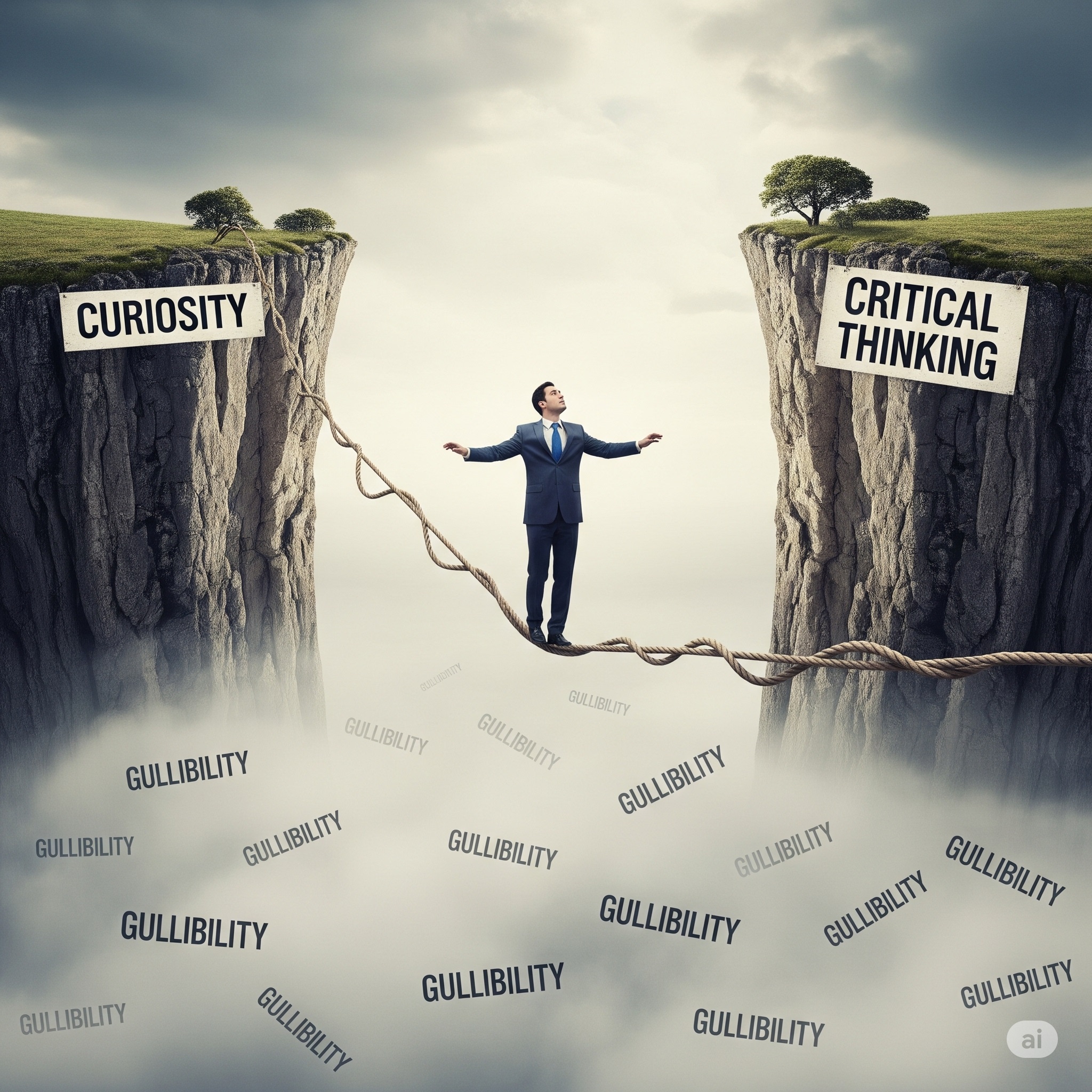
IntroductionIn the next few minutes, you'll discover how to harness intellectual curiosity as your...

IntroductionThe traditional career path is broken. While your peers accumulate debt chasing degrees...

IntroductionThe corporate world is waking up to a harsh reality: robots are getting smarter, degrees...

Empowering Personal Growth Together










jNIXsbxhMrrtoDdcnPYjcZyi
Yes https://topolakd.net
rsrd\jzfdnzfd vbfdxb
swfewqfv sht n
Accountability is key to growth, and sharing your journey publicly adds a whole...