
-
 James_Spiegel
-
Main Account
-
Forums
-
Write what you are looking for and press enter to begin your search!
James_Spiegel
Main Account
Forums


Introduction
In today's rapidly evolving job market, the traditional path of spending four years and accumulating substantial debt for a degree is increasingly being questioned. This article explores how you can hack your neural pathways to develop a powerful growth mindset that will enable you to break into graduate-level careers without the conventional university route. You'll discover practical neuroplasticity techniques, strategic learning approaches, and mindset shifts that can position you competitively against degree-holding candidates. By the end of this article, you'll have a roadmap for rewiring your brain to become a self-directed learning machine capable of continuous adaptation and success.
The Neuroscience of Self-Directed Learning
What Happens in Your Brain When You Learn
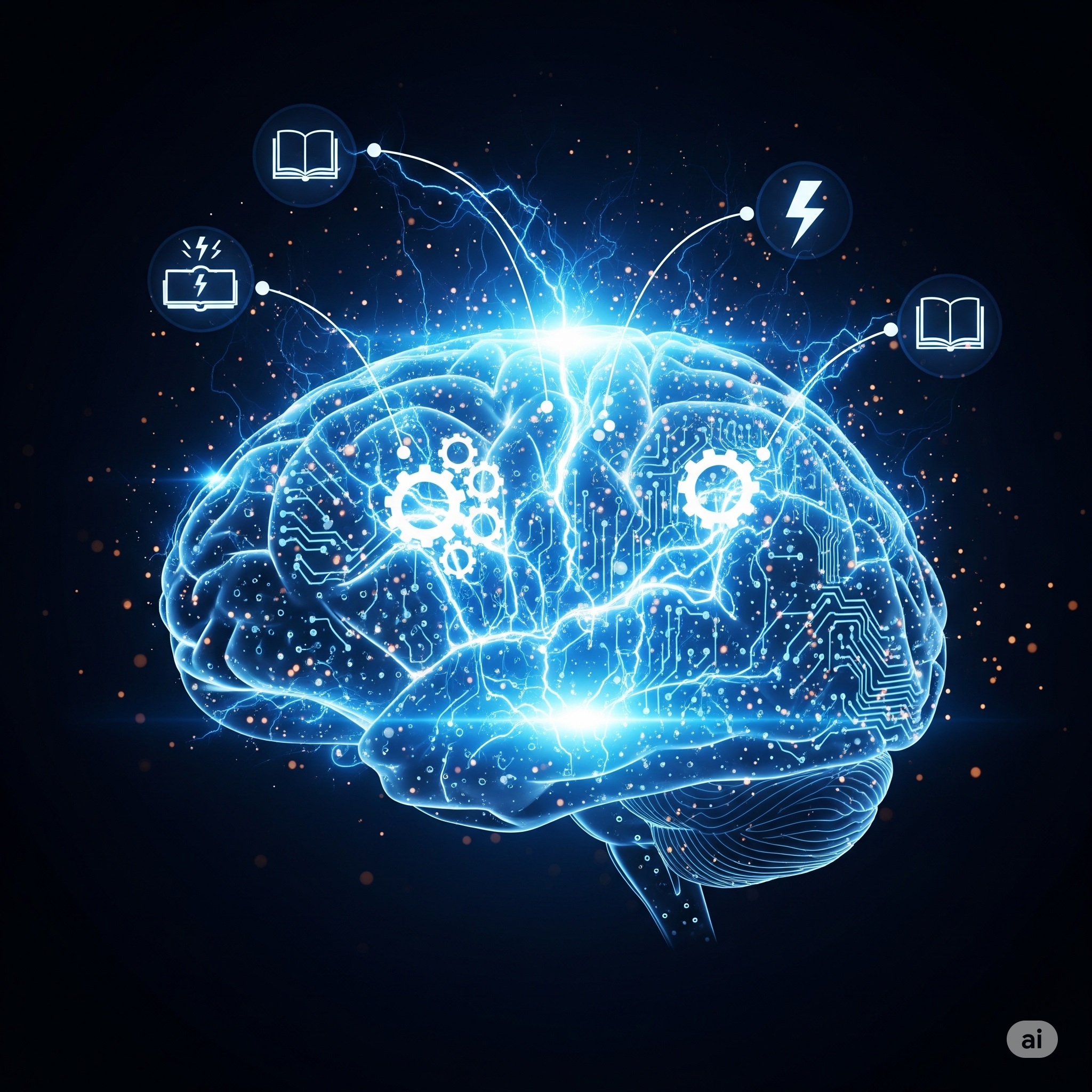
Your brain physically changes with every new skill or piece of knowledge you acquire. This phenomenon, known as neuroplasticity, is the foundation of all learning and the secret weapon of successful self-educators.
When you learn something new, neurons in your brain form new connections (synapses). The more you practice or recall information, the stronger these connections become. This is why the old adage "neurons that fire together, wire together" is so fundamental to understanding effective learning.
What most degree programs don't tell you is that this process happens regardless of whether you're sitting in a lecture hall or teaching yourself from free online resources. Your brain doesn't care about credentials, it responds to consistent, focused engagement with challenging material.
Rewiring Your Neural Pathways for Growth
The controversial truth that traditional education systems rarely acknowledge is that you can deliberately engineer this rewiring process. Here's how to do it:
1. Embrace the discomfort of not knowing: When you encounter difficult concepts, your amygdala (the brain's threat detection center) activates, triggering fear and avoidance. Traditional education often shields students from this discomfort. Self-learners must learn to recognize this response as a signal of potential growth, not a reason to retreat.
2. Apply spaced repetition techniques: Research shows that reviewing information at strategic intervals (increasingly spaced apart) strengthens neural connections more effectively than cramming. Tools like Anki use algorithms specifically designed to optimize this process.
3. Leverage the production effect: Studies demonstrate that you remember information better when you actively produce it rather than passively consume it. Explaining concepts aloud, teaching others, or creating content forces deeper neural encoding than highlighting text or re-reading notes.
4. Use strategic stress to your advantage: Moderate stress releases norepinephrine, which enhances attention and memory formation. Setting ambitious deadlines for self-learning projects can simulate the productive pressure of formal education.
The Strategic Framework for Brain-Optimized Learning
When to Deploy Different Learning Approaches
Timing is crucial when rewiring your brain for career-ready skills. While degree programs follow rigid semester schedules, self-learners can strategically align their brain's natural learning rhythms with skill acquisition:
- Morning hours (6am-11am): Research shows your prefrontal cortex (responsible for complex thinking) functions optimally during these hours. Reserve this time for learning the most challenging technical concepts in your field.
- Mid-day (12pm-3pm): As your brain experiences a natural dip in alertness, shift to practice-based application of morning concepts or collaborative work.
- Late afternoon/evening (4pm-8pm): Studies indicate this period is ideal for creative connections. Use this time for interdisciplinary learning that connects technical skills with broader industry understanding.
- Before sleep: The 30-minute window before sleep is golden for reviewing key concepts, as your brain consolidates memories during sleep cycles.
Where to Find Elite-Level Knowledge Without Campus Access
The location of learning affects how your brain encodes information. Create a multi-environment learning strategy:
1. Digital sanctuaries: Beyond obvious platforms like Coursera and edX, seek out specialized knowledge repositories like GitHub project wikis, industry Slack channels, and expert AMAs on Reddit where professionals share insider knowledge.
2. Physical learning zones: Research shows that varying your learning environment improves recall. Rotate between 3-5 different physical locations to strengthen neural connections to the material.
3. Industry immersion: Your brain forms stronger neural patterns when learning is contextual. Find ways to physically place yourself in relevant environments through meetups, conferences, or even working in adjacent roles.
4. Community nexus points: Identify where practitioners of your target field congregate online and offline. These spaces provide exposure to current thinking that often precedes what's taught in formal programs.
Why Self-Directed Learners Have a Neural Advantage
The controversial truth that universities won't advertise is that self-directed learners often develop stronger neural pathways for continuous adaptation – the exact quality employers increasingly value.
The Biological Basis of the Growth Mindset
Stanford psychologist Carol Dweck's growth mindset theory has a neurological basis. When you believe your abilities can be developed (growth mindset), your brain shows different activation patterns than when you believe they're fixed.
Self-learners inherently develop this neural pattern by:
1. Regularly confronting and overcoming knowledge gaps: Each successful learning challenge reinforces neural pathways associated with capability expansion.
2. Creating personalized feedback loops: Without the structure of grades and professor feedback, self-learners must develop metacognitive skills that strengthen connections between the brain's performance monitoring and strategic planning regions.
3. Developing neural resilience through failure: When you teach yourself, failures happen without the safety net of a structured program. This builds stronger connections between your brain's error-detection and problem-solving networks.
4. Practicing continuous recalibration: Self-learners must constantly evaluate their progress against industry standards, strengthening neural networks involved in strategic thinking.
The Neurological Roots of Imposter Syndrome (and How to Overcome It)
The self-learner's path inevitably triggers imposter syndrome: a response that has neurological origins. Understanding this brain mechanism is essential.
When entering unfamiliar professional territory without formal credentials, your brain's anterior cingulate cortex flags the discrepancy between your self-perception and perceived external expectations. This creates anxiety and doubt.
Counter this neural response by:
1. Documenting your learning journey: Creating tangible evidence of your growth builds new neural connections that support confidence.
2. Seeking specific validation: Strategically request feedback on particular skills rather than general affirmation. This helps your brain form accurate self-assessment patterns.
3. Practicing value articulation: Regularly explaining how your self-acquired skills translate to employer needs strengthens neural pathways connecting your abilities to professional contexts.
How to Build a Self-Learner's Brain Trust
The human brain evolved as a social organ. Leveraging this biological reality accelerates your growth as a self-directed learner.
Building Your Personal Brain Trust
While universities provide ready-made learning communities, self-learners must strategically construct these networks:
1. Identify knowledge nodes: Find individuals who represent different aspects of your target field. Research shows diverse cognitive inputs create stronger neural integration of concepts.
2. Create reciprocal learning relationships: The brain forms stronger connections when teaching others. Establish mutually beneficial learning exchanges where you both share and receive knowledge.
3. Develop a challenge council: Surround yourself with people who will question your assumptions. This activates your brain's conflict resolution mechanisms, leading to deeper understanding.
4. Find your cognitive complements: Identify individuals whose thinking styles differ from yours. Neurological research shows that exposure to different cognitive approaches enhances your brain's adaptability.
The Accountability Architecture
Without external structures, self-learners must create systems that leverage the brain's reward circuitry:
1. Implement public commitment mechanisms: Publicly declaring learning goals activates your brain's consistency bias, increasing follow-through.
2. Create artificial stakes: Set up consequences for missed learning targets. This engages your brain's loss aversion neural circuits, which research shows are more motivating than potential gains.
3. Establish micro-reward systems: Design small, immediate rewards for learning milestones. This triggers dopamine release, strengthening neural pathways associated with learning activities.
4. Use social verification: Regular skill demonstrations to knowledgeable peers activates both reward and social confirmation neural circuits, reinforcing learning.
Which Industries Are Most Receptive to Self-Taught Talent
Not all fields offer equal opportunity for self-taught professionals. Understanding where the barriers are lowest helps direct your brain's learning resources efficiently:
1. Technology and software development : These industries have long prioritized demonstrated skills over credentials, with established paths for portfolio-based hiring.
2. Digital marketing and content creation: Fields where results are highly measurable often value demonstrated capabilities over formal education.
3. Data analysis and visualization: Companies increasingly hire based on technical assessments and project portfolios rather than degrees.
4. Creative fields and design: Portfolio-based hiring makes these accessible to self-taught professionals who can demonstrate quality work.
5. Emerging technologies: Areas like blockchain, AR/VR, and specific AI applications often lack established educational pathways, creating openings for self-directed learners.
The neurological advantage in these fields comes from the rapid evolution of required knowledge. Self-learners who have developed strong neural pathways for continuous adaptation can often outpace traditionally educated professionals whose learning patterns were formed in more structured environments.
Conclusion: Your Brain as a Continuous Growth Engine
Rewiring your brain for self-directed learning isn't just about acquiring specific skills, it's about transforming your neural architecture to support lifelong adaptation and growth. The approaches outlined in this article aren't shortcuts; they're sophisticated strategies for developing your most valuable asset: your brain's capacity to learn anything.
The degree-free path to professional success isn't for everyone. It requires deliberately engineering your learning environment, creating accountability structures, building strategic relationships, and consistently pushing through the discomfort of growth. But for those willing to master these neurological principles, the rewards extend beyond career opportunities to a lifetime of intellectual empowerment.
Key Takeaways for Your Learning Journey:
1. Neuroplasticity is non-negotiable: Schedule deliberate practice and spaced repetition to physically strengthen neural connections for key skills.
2. Leverage your brain's natural rhythms: Align different types of learning with your cognitive energy fluctuations throughout the day.
3. Construct multi-environmental learning: Vary physical and digital learning environments to strengthen neural encoding of important concepts.
4. Build reciprocal learning relationships: Create a network that challenges your thinking and provides diverse cognitive inputs.
5. Document your learning journey: Counter imposter syndrome by creating tangible evidence of your growth and skill development.
6. Create accountability architecture: Design systems that leverage your brain's reward circuitry to maintain consistent progress.
7. Focus on demonstration, not credentials: Develop compelling evidence of your capabilities through projects, portfolios, and public work.
The future belongs not to those with the most impressive credentials, but to those who have developed the neural architecture for continuous learning and adaptation. By implementing these strategies, you're not just positioning yourself for a single career opportunity, you're developing the most valuable skill of the modern economy: the ability to rewire your brain for whatever comes next.

IntroductionWhile traditional graduates accumulate debt and theoretical knowledge, a growing army of...

The brutal truth about today's job market is this: your degree is becoming irrelevant faster than yo...

IntroductionIn a world where traditional education paths are increasingly challenged, self-learning...

Empowering Personal Growth Together











jNIXsbxhMrrtoDdcnPYjcZyi
Yes https://topolakd.net
rsrd\jzfdnzfd vbfdxb
swfewqfv sht n
Accountability is key to growth, and sharing your journey publicly adds a whole...