
-
 James_Spiegel
-
Main Account
-
Forums
-
Write what you are looking for and press enter to begin your search!
James_Spiegel
Main Account
Forums


In the rapidly evolving job market of today, traditional education is increasingly becoming just one of many paths to career success. For ambitious young professionals looking to break into graduate-level careers without the financial burden and time commitment of a traditional degree, self-learning offers a powerful alternative. But self-learning without a plan is like driving without a map, you might eventually reach your destination, but you'll waste valuable time taking wrong turns and detours. This article will guide you through creating a personalized roadmap for mastering any skill or knowledge area, helping you navigate the complex terrain of self-directed learning with confidence and efficiency.
What Exactly is a Roadmap and Why is it Useful?
A learning roadmap is a strategic document that outlines your educational journey from novice to proficient. Unlike generic course syllabi or educational curricula, a personalized roadmap is tailored specifically to your goals, current skill level, learning preferences, and time constraints.
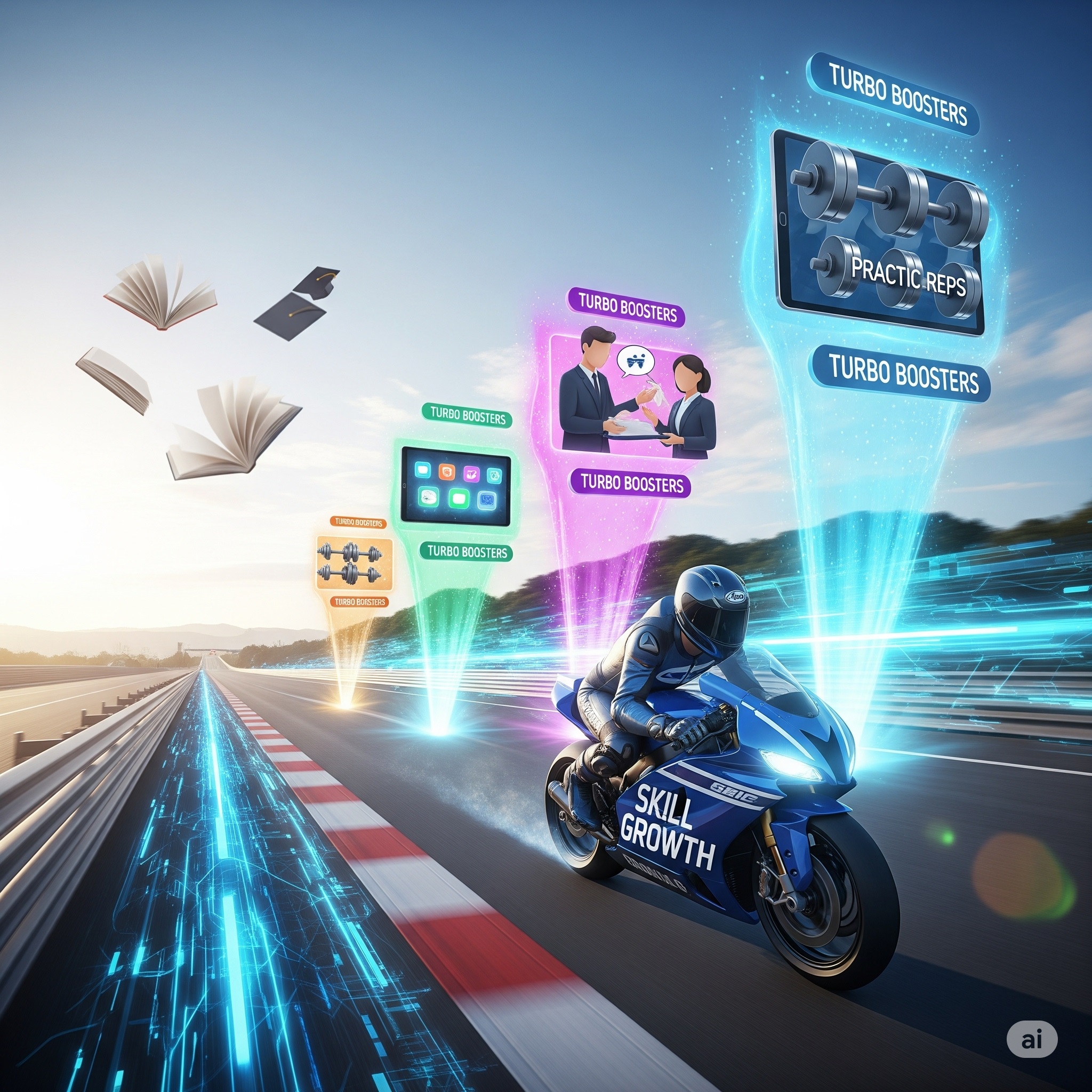
Think of it as your personal GPS for skill acquisition; it shows your starting point, destination, and the most efficient route between them. A well-crafted roadmap includes:
- Clear destination: Concrete, measurable goals that define what "success" looks like
- Major milestones: Intermediary checkpoints to track progress and maintain momentum
- Learning resources: Specific books, courses, videos, and mentors that will guide your journey
- Timeline: Realistic timeframes for reaching each milestone
- Assessment methods: Ways to evaluate your progress and identify knowledge gaps
The power of a roadmap lies in its ability to transform an overwhelming ambition ("I want to become a data scientist") into manageable steps ("This week, I'll complete these three Python tutorials"). This transformation from abstract aspiration to concrete action is the difference between dreaming about a career and actually building one.
Industry professionals who've forgone traditional educational paths consistently identify structured self-learning as their secret weapon. A roadmap provides that structure, ensuring that every hour you invest in learning produces maximum returns in skill development.
When and Where Are the Best Times to Create a Roadmap?
Optimal Timing
The best time to create a learning roadmap is before you begin any serious learning effort, but there are specific circumstances when developing one becomes particularly valuable:
1. When pivoting careers: Before investing time in learning new skills for a career change, map out what specific competencies are actually valued in your target role
2. When facing skill plateaus: If your learning has stagnated, a refreshed roadmap can help identify what's holding you back
3. After completing foundational learning: Once you've mastered basics, a more advanced roadmap can guide your journey to expertise
4. During periods of high motivation: Capitalize on motivation spikes by channeling that energy into planning
5. After speaking with industry insiders: Conversations with professionals can reveal what skills truly matter, allowing you to refine your roadmap

Ideal Environments
The environment where you create your roadmap significantly impacts its quality:
- Distraction-free spaces: Create your roadmap somewhere quiet where you can think deeply
- Resource-rich settings: Libraries, co-working spaces, or well-equipped home offices provide access to resources for research
- Collaborative environments: Coffee meetings with mentors or peers can generate valuable insights for your roadmap
- Digital planning tools: Platforms like Notion, Trello, or specialized learning management systems offer templates and collaboration features
The best roadmaps emerge from both solitary reflection and collaborative input, so consider incorporating both isolated planning sessions and feedback from others in your field.
What Are the Cons of Using a Roadmap?
While learning roadmaps offer tremendous benefits, they come with potential pitfalls that self-learners should recognize:
1. False sense of linearity: Learning rarely follows a perfectly sequential path. Real skill development involves loops, detours, and unexpected discoveries that no roadmap can fully predict.
2. Rigidity trap: Adhering too strictly to a pre-defined roadmap can blind you to emerging opportunities or more efficient learning paths that weren't visible when you started.
3. Analysis paralysis: Some aspiring self-learners spend so much time perfecting their roadmap that they never actually begin learning.
4. Resource obsolescence: In fast-moving fields, the learning resources you identify today might be outdated in six months.
5. Motivation conflicts: Following someone else's roadmap (even a customized one) can sometimes feel like homework rather than self-directed learning, potentially diminishing intrinsic motivation.
These disadvantages don't negate the value of roadmaps, but they highlight the importance of viewing your roadmap as a living document rather than an unchangeable script. The most successful self-learners strike a balance: they use roadmaps for structure and direction while remaining flexible enough to adapt when necessary.
Why is Personalization an Essential Component of Self-Directed Learning?
Generic learning plans are the educational equivalent of off-the-rack suits, they might fit adequately, but they'll never match the performance of something tailored to your specifications. Personalization matters for several critical reasons:
1. Efficiency optimization: Personalized roadmaps allow you to bypass content you already know and focus intensively on your specific knowledge gaps.
2. Motivation enhancement: Learning paths aligned with your interests and goals naturally generate more motivation than generic curricula.
3. Cognitive compatibility: We all process information differently. Personalization allows you to select learning methods that work with your cognitive style rather than against it.
4. Real-world relevance: Educational institutions teach standardized content, but employers value unique skill combinations. Personalization helps you develop distinctive expertise that stands out in the job market.
5. Accelerated mastery: By focusing on exactly what you need to learn in the sequence that makes most sense for you, personalization can dramatically reduce the time required to reach proficiency.
The controversial truth that educational institutions rarely acknowledge is that standardized learning paths primarily serve the needs of educational systems, not individual learners. Self-learners have the advantage of designing learning experiences optimized for their specific circumstances, potentially achieving comparable or superior results in less time and at lower cost than traditional education.

What to Do When You Get Stuck?
Even with the best roadmap, you'll inevitably encounter obstacles in your learning journey. When progress stalls, try these proven strategies:
1. Diagnose the specific obstacle: Are you facing a conceptual challenge, motivation problem, resource limitation, or time constraint? Different obstacles require different solutions.
2. Seek alternative explanations: If a concept isn't clicking, find it explained by different teachers. Sometimes the problem isn't the concept but the explanation.
3. Implement the 20-minute rule: When truly stuck, spend exactly 20 minutes trying to solve the problem independently. If still stuck after 20 minutes, actively seek help rather than waste additional time.
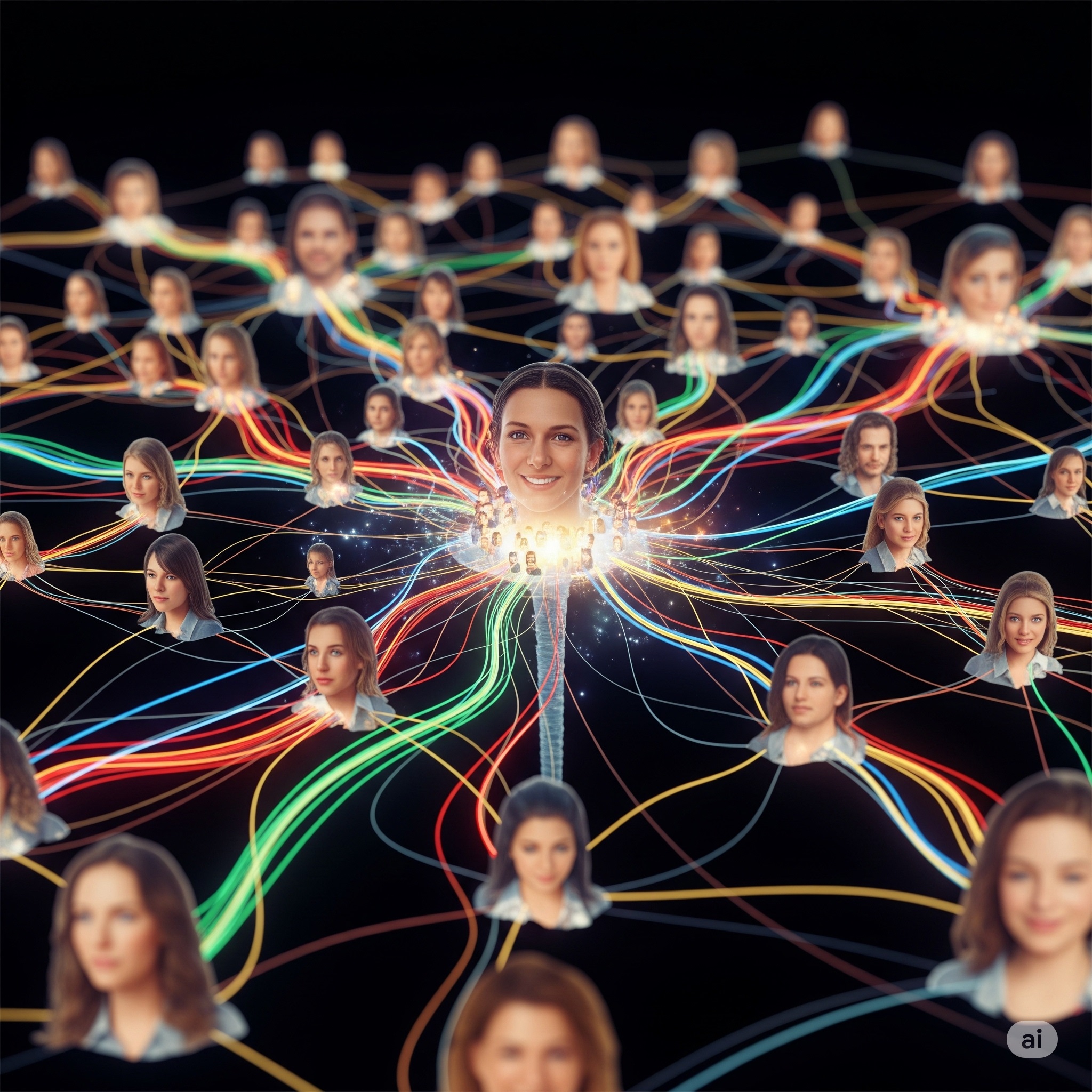
4. Leverage learning communities: Online forums, Discord servers, and local meetups provide access to peers and mentors who can offer fresh perspectives.
5. Embrace productive struggle: Research shows that working through difficulties enhances long-term learning. Not all "stuck" moments need immediate resolution.
6. Revisit foundations: Sometimes progress stalls because earlier concepts weren't fully mastered. Don't hesitate to backtrack.
7. Switch learning modalities: If textbooks aren't working, try videos. If videos aren't working, try hands-on projects.
8. Schedule strategic breaks: The "Aha!" moment often comes when you step away and let your subconscious process the problem.
The ability to overcome learning obstacles might be the single most valuable skill you can develop. Traditional education provides external structures to push students through barriers, but self-learners must develop internal resources for confronting and overcoming challenges independently.
Conclusion: Chart Your Course, Change Your Future
Creating a personalized roadmap for self-learning isn't just about educational efficiency, it's about taking control of your future in a world where traditional credentials are increasingly being questioned. By developing the skill of structured self-learning, you're not just preparing for one career; you're building the meta-skill that will enable you to adapt to whatever changes the future brings.
We've covered the essential components of an effective learning roadmap, the optimal conditions for creating one, the potential pitfalls to avoid, the critical importance of personalization, and strategies for overcoming the inevitable obstacles you'll face. With these tools, you're equipped to chart a learning journey that can rival, and often exceed traditional educational paths.
Key takeaways:
1. Roadmaps transform aspirations into actions by breaking seemingly insurmountable skills into manageable steps.
2. Timing and environment matter create your roadmap when motivation is high and seek both solitude and feedback.
3. Maintain flexibility in your roadmap to avoid the rigidity trap and adapt to new opportunities.
4. Personalize aggressively based on your goals, prior knowledge, learning style, and real-world requirements.
5. Develop resilience strategies for overcoming obstacles rather than expecting smooth sailing.
6. View self-learning as a competitive advantage, not a compromise. The ability to learn independently sets you apart in an automated world.
The future belongs to those who can learn, unlearn, and relearn without institutional hand-holding. By mastering the art of the personalized learning roadmap, you're not just saving time and money, you're developing the self-direction that employers increasingly value above traditional credentials.
Your learning journey begins now. Will you follow someone else's map, or chart your own course?

IntroductionThe traditional path to career success—four years of university, mounting debt, and a p...

IntroductionIf you're tired of watching your friends accumulate debt while you're stuck in the endl...
In a world where traditional education is rapidly becoming obsolete, a revolutionary approach is eme...
Empowering Personal Growth Together









jNIXsbxhMrrtoDdcnPYjcZyi
Yes https://topolakd.net
rsrd\jzfdnzfd vbfdxb
swfewqfv sht n
Accountability is key to growth, and sharing your journey publicly adds a whole...