
-
 James_Spiegel
-
Main Account
-
Forums
-
Write what you are looking for and press enter to begin your search!
James_Spiegel
Main Account
Forums


Introduction
If you're tired of watching your friends accumulate debt while you're stuck in the endless cycle of "learning" without landing the career you want, this article is your wake-up call. You'll discover why your course collection is keeping you broke and unemployed, how to identify projects that actually matter to employers, the art of showcasing your work like a professional, and the controversial truth about why project completion trumps certification every single time. Most importantly, you'll learn what to do when projects go sideways—because they will.
The Course Addiction: Why Short Courses Are Digital Junk Food
Walk into any coffee shop and you'll find someone hunched over their laptop, frantically taking notes on their seventh Udemy course this month. The self-learning landscape is flooded with bite-sized courses promising to transform you into a data scientist, web developer, or digital marketer in just 30 days. These courses are everywhere: Coursera's specializations, Udemy's discount binges, YouTube tutorials, and bootcamp previews that cost more than your monthly rent.
Here's the uncomfortable truth: most of these courses are designed to make you feel productive while keeping you perpetually unqualified. They're structured like academic programs, heavy on theory, light on application, and completely divorced from real-world problem-solving. You'll learn Python syntax but never write a program that solves an actual business problem. You'll understand marketing funnels but never create one that generates a single lead.
The course creators know this. They've built a subscription economy around your insecurity, feeding you just enough information to feel smart but not enough to become dangerous. The real kicker? Employers can spot a course-collector from a mile away. Your resume screams "I watch videos and take quizzes" instead of "I build things and solve problems."
The fundamental flaw with short courses is that they treat learning like consumption rather than creation. They position you as a passive recipient of knowledge rather than an active problem-solver. This approach might work in traditional education, but in the real world, nobody cares what you've learned, they care what you can do.
Projects That Actually Matter: Your Ticket to Professional Credibility
Real projects are messy, frustrating, and incomplete. They don't have step-by-step tutorials or perfectly formatted datasets. They require you to make decisions with incomplete information, debug problems that don't exist in textbooks, and deliver results that someone actually uses.
For aspiring developers, this means building applications that solve real problems, not tutorial clones. Create a personal finance tracker for your friend's small business, automate a repetitive task for a local nonprofit, or build a tool that scratches your own itch. The key is solving actual problems for actual people.
Data science hopefuls should abandon the Titanic dataset and iris flowers. Instead, analyze local crime data to help community organizations allocate resources, predict equipment failures for a manufacturing contact, or build recommendation systems for local businesses. The messiness of real data will teach you more than any sanitized course dataset ever could.
Marketing enthusiasts need to stop creating fake campaigns and start driving real results. Launch a social media campaign for a local business, create content that generates actual engagement, or run A/B tests that influence purchasing decisions. Document your failures as rigorously as your successes, both are valuable.
The golden rule for project selection: if you can't find someone who would genuinely benefit from your work, it's probably not worth doing. This doesn't mean every project needs to be revolutionary, but it should solve a real problem for a real person or organization.
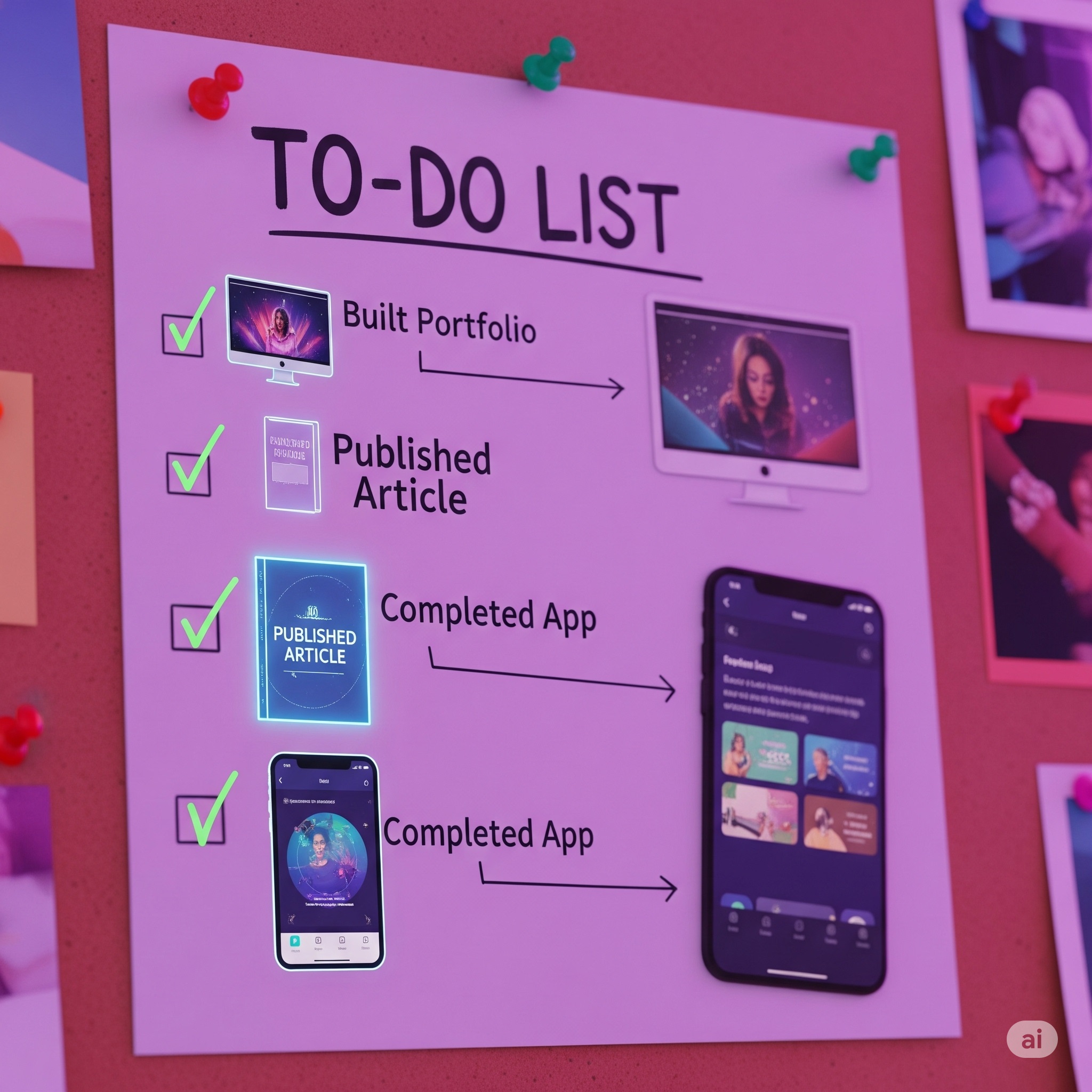
The Art of Demonstrating Completion: Making Your Work Impossible to Ignore
Completing a project is only half the battle. The other half is proving you completed it in a way that matters to the people who might hire you. This is where most self-learners fail spectacularly. They treat project documentation like an afterthought, throwing together a basic README file and calling it a day.
Professional project demonstration requires obsessive attention to the story you're telling. Start with the problem you solved and why it mattered. Use specific numbers wherever possible: "I reduced processing time by 40%" beats "I made things faster" every time. Include before-and-after comparisons, user testimonials, and concrete evidence of impact.
Your project portfolio should live in multiple places and formats. GitHub repositories with detailed documentation, live demos that people can actually use, case studies that walk through your decision-making process, and video presentations that showcase your communication skills. Each format serves a different purpose and appeals to different types of evaluators.
The most powerful demonstration technique is the "working in public" approach. Document your process as you go, share obstacles you encountered, and explain how you overcame them. This transparency builds trust and demonstrates resilience, qualities that employers value more than technical perfection.
Consider creating content around your projects: blog posts explaining your methodology, videos walking through your code, or presentations for local meetups. This meta-content proves you can communicate complex ideas clearly, a skill that's often more valuable than the technical work itself.

The Controversial Edge: Why Projects Beat Certifications Every Time
This is where we enter controversial territory. The education industry has spent decades convincing us that credentials matter most. Certifications, degrees, and course completions are supposedly the currency of professional advancement. But here's what they don't tell you: in rapidly evolving fields, credentials are often outdated before the ink is dry.
Projects provide proof of current capability in a way that certifications cannot. When you show an employer a working application, a successful marketing campaign, or a data analysis that drove business decisions, you're demonstrating real-world competence. Certifications show you can pass tests; projects show you can solve problems.
The edge goes deeper than just capability demonstration. Project completion develops a psychological resilience that course-taking cannot replicate. When you've wrestled with a bug for three days, negotiated scope changes with a client, or pivoted your approach based on user feedback, you've developed the mental toughness that employers desperately need.
Projects also force you to develop the peripheral skills that courses ignore: project management, client communication, deadline management, and quality assurance. These "soft skills" often determine career success more than technical ability.
Perhaps most importantly, projects give you stories to tell in interviews. Instead of discussing theoretical knowledge, you can walk through real decisions you made under pressure. You can explain trade-offs you considered, mistakes you made, and lessons you learned. These narratives are far more compelling than reciting course content.
When Projects Go Wrong: The Recovery Playbook
Let's address the elephant in the room: projects fail. Sometimes spectacularly. The instinct is to hide these failures, delete the repositories, and pretend they never happened. This is exactly the wrong approach.
Project failures are career gold if you handle them correctly. They demonstrate that you're willing to take risks, tackle challenging problems, and learn from mistakes. The key is in how you frame and document the failure.
Start by conducting a thorough post-mortem. What went wrong? Was it a technical problem, a scope issue, or a communication breakdown? Be brutally honest about your role in the failure. This self-awareness is incredibly valuable to potential employers.
Next, extract the lessons learned. What would you do differently? What skills do you need to develop? How would you prevent similar issues in future projects? This reflection shows growth mindset and professional maturity.
Finally, consider whether the "failed" project contains salvageable elements. Maybe the full application didn't work, but individual components demonstrate valuable skills. Perhaps the marketing campaign didn't meet its goals, but the research and strategy work shows solid thinking.
Never delete failed projects entirely. Instead, document them honestly in a "lessons learned" section of your portfolio. This transparency builds trust and shows that you're someone who learns from experience rather than someone who only shares their wins.
The worst thing you can do is let project failure send you back to course-collecting. When a project doesn't work out, the solution isn't more learning, it's better execution on the next project.
Conclusion
The self-learning revolution is real, but it's being sabotaged by an industry that profits from keeping you in perpetual student mode. While your peers accumulate debt and degrees, you have the opportunity to build something more valuable: a portfolio of real work that solves real problems.
The key takeaways that will transform your self-learning journey:
Stop consuming, start creating. Every hour spent in a course is an hour not spent building something meaningful. Choose projects over programs, creation over consumption.
Embrace the mess. Real projects are chaotic, incomplete, and frustrating. This messiness is where actual learning happens. Sanitized courses prepare you for a world that doesn't exist.
Document everything obsessively. Your work is only as valuable as your ability to demonstrate its impact. Treat documentation as a core skill, not an afterthought.
Fail forward, fast. Project failures are career accelerators if you handle them correctly. Extract lessons, share insights, and move on to the next challenge.
Build in public. Transparency builds trust. Share your process, your struggles, and your solutions. This openness differentiates you from credential collectors.
The self-directed learning path isn't easier than traditional education, it's just more honest about what success actually requires. While others are earning certificates, you'll be earning credibility. While they're learning theory, you'll be solving problems. While they're accumulating debt, you'll be building a career.
The question isn't whether you're smart enough to learn independently. The question is whether you're brave enough to stop learning and start building.

IntroductionThe traditional path to career success—four years of university, mounting debt, and a p...

In the rapidly evolving job market of today, traditional education is increasingly becoming just one...

In a world where traditional education is rapidly becoming obsolete, a revolutionary approach is eme...

Empowering Personal Growth Together














jNIXsbxhMrrtoDdcnPYjcZyi
Yes https://topolakd.net
rsrd\jzfdnzfd vbfdxb
swfewqfv sht n
Accountability is key to growth, and sharing your journey publicly adds a whole...